
Al Talli
An intricate technique, a timeless beauty
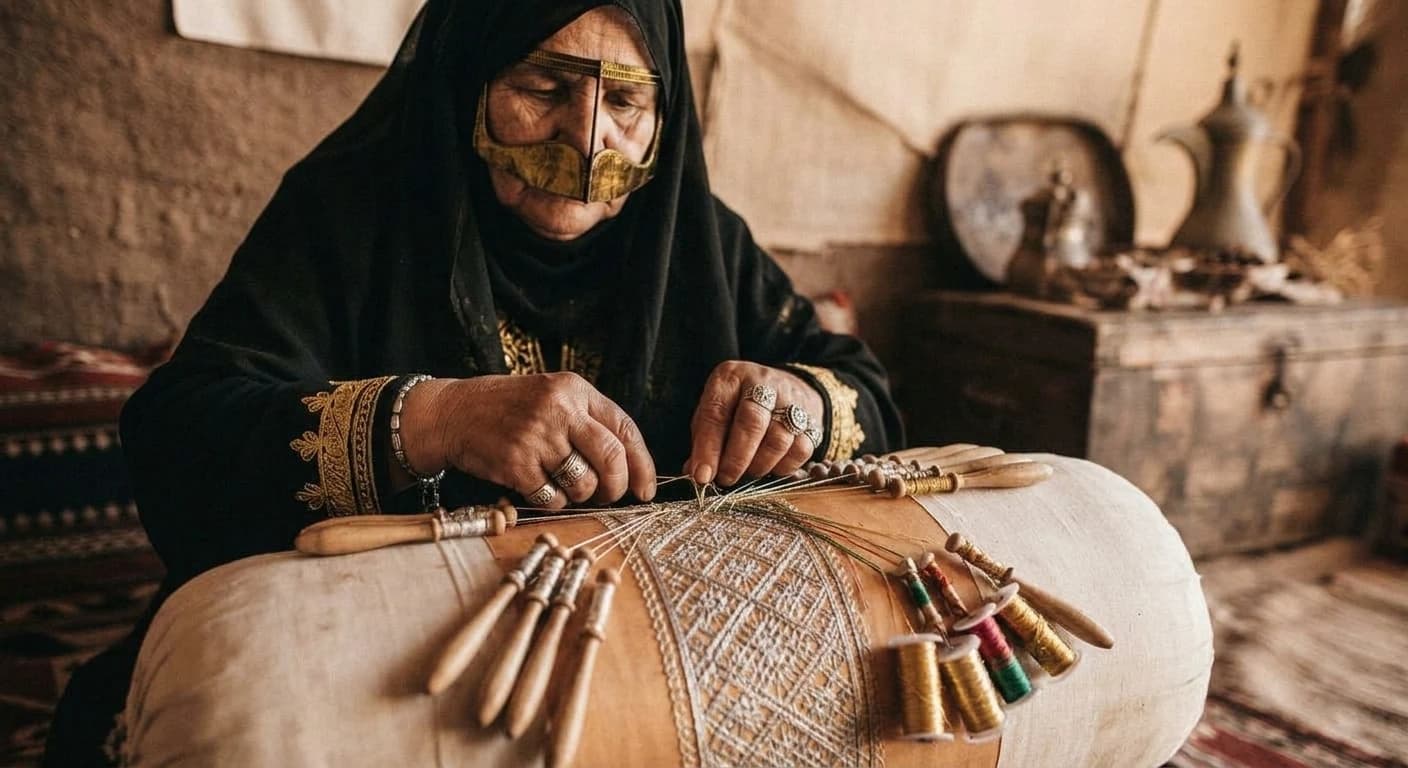
Beauty woven, not embroidered. A braid made thread by thread.
Al Talli began in Emirati homes, where women transformed cotton and shimmering metallic threads into intricate braids. Unlike embroidery, its beauty lies in interlacing threads by hand, one by one. These delicate braids adorned the collars, sleeves and hems of traditional dresses, adding elegance to everyday wear and special occasions. Once woven with real silver and gold, Al Talli today mainly uses metallic synthetic threads.
A Unique Technique, Tools of Tradition
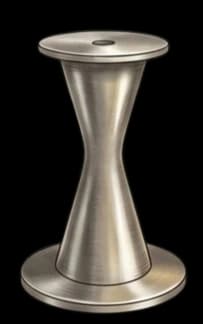
Al Kajoujah – الكوجة
The metal stand supporting the artisan's work.
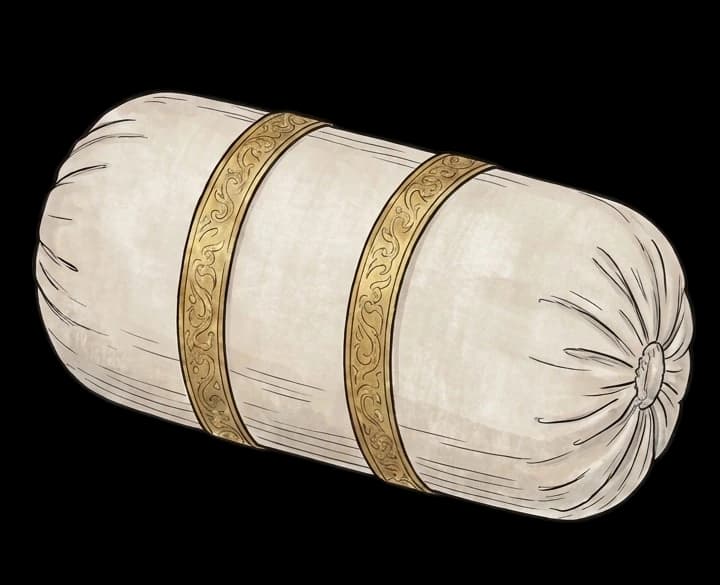
Al Mousadah – المسندة
The padded cushion on which the threads are arranged.
Al Dahary – الضفاري / الدحاري
Small bobbins holding and guiding individual threads.
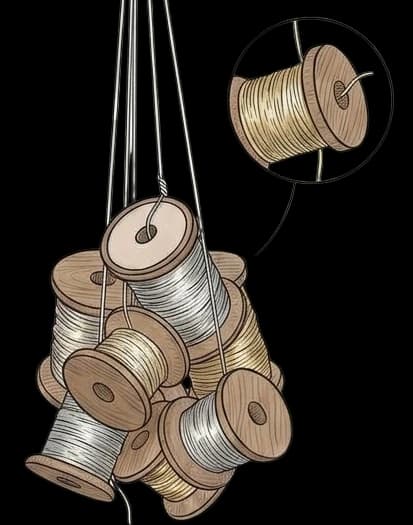
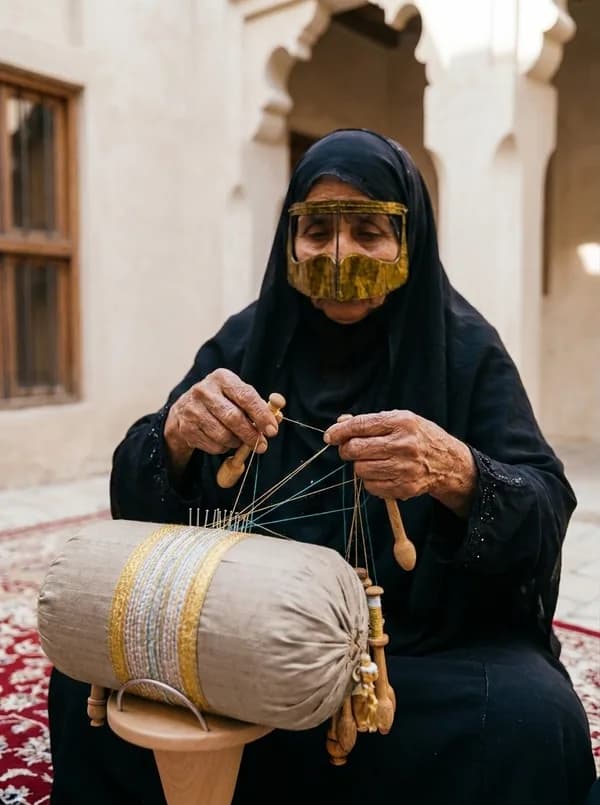
At the heart of Al Talli is the Kajoujah, a traditional metal stand with a padded cushion, where threads are arranged on small bobbins. The artisan carefully crosses and twists them to create intricate patterns. Depending on the design, 8 to 50 bobbins may move in a carefully coordinated rhythm, demanding patience, precision and years of practice. Even a single metre of Talli can take hours, or sometimes months, to complete. The finished braid is then sewn onto garments, turning simple fabric into something extraordinary.
Every pattern has a name. Every thread tells a story.
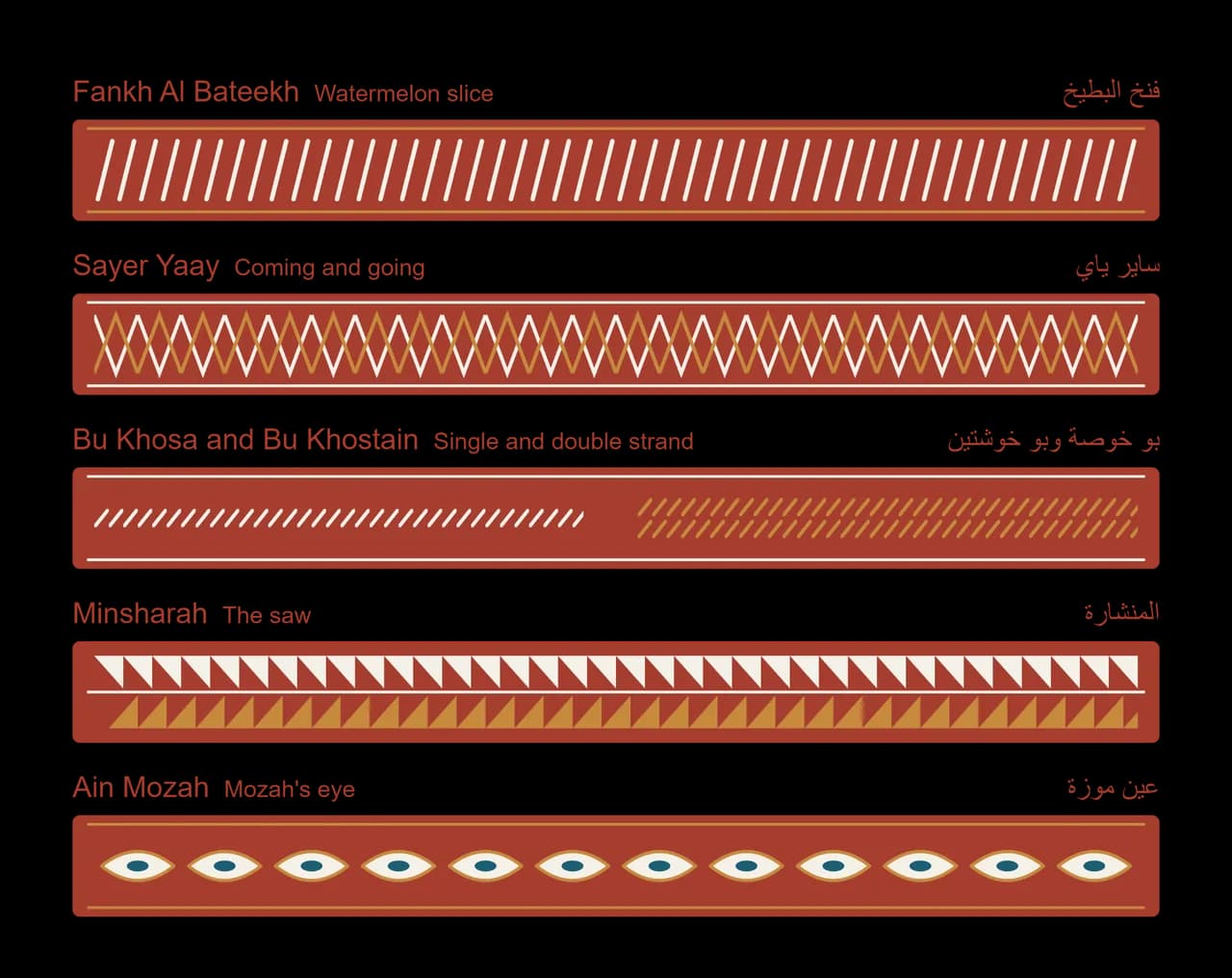
Al Talli patterns reveal a remarkable eye for detail. Some are named after their weaving techniques, while others take inspiration from everyday objects and the world around them.
Fankh Al Bateekh (فنخ البطيخ) – Watermelon Slice: Slanted lines inspired by watermelon seeds create a rhythmic geometric pattern.
Sayer Yaay (ساير ياي) – Coming and Going: Silver threads move back and forth to form a distinctive interlaced pattern.
Bu Khosa & Bu Khostain (بو خوصة وبو خوشتين) – Single and Double Strand: One or two silver strands create narrow or broader decorative bands.
Minsharah (المنشارة) – The Saw: Saw-tooth-inspired edges form a striking, repeating zigzag pattern.
Ain Mozah (عين موزة) – Mozah's Eye: An elongated, eye-like motif inspired by the shape of an oblong pearl.
Sister Crafts! Textile Arts & Embroidery
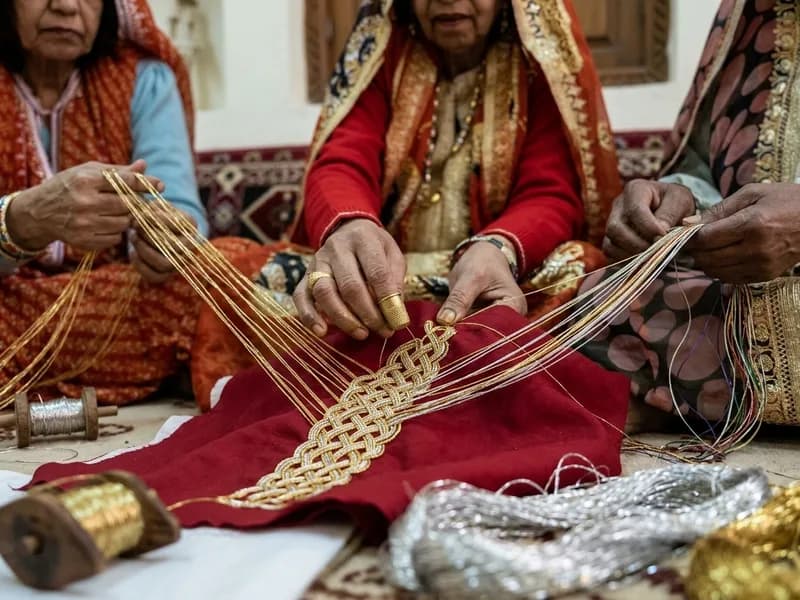
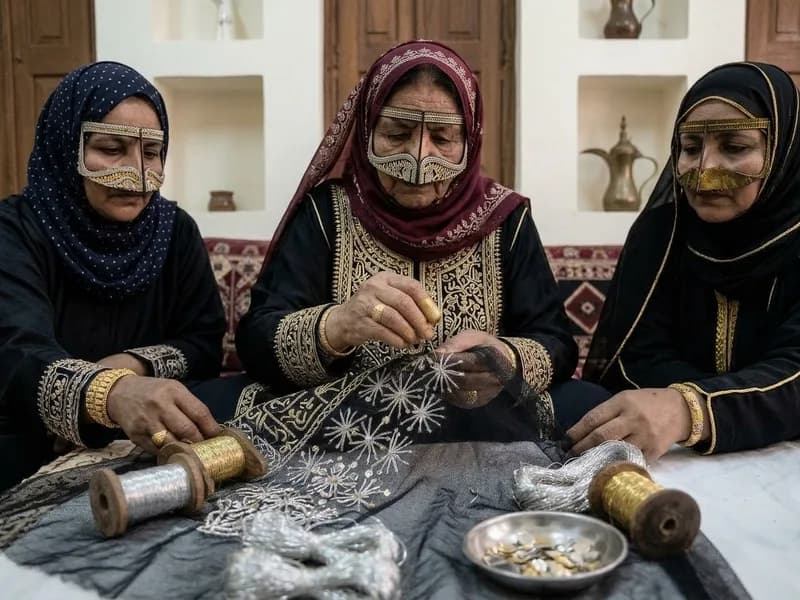
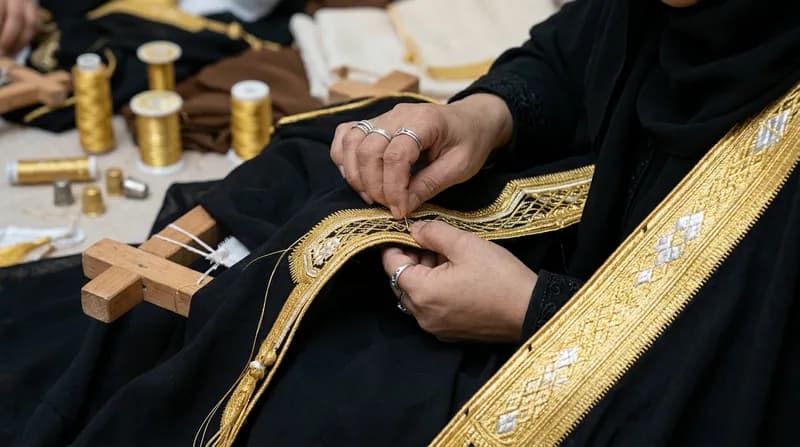
Al Talli is part of a wider family of traditional textile arts, alongside crafts such as Al Kurar, Al Naqda, hand spinning, Al Sadu and Bisht embroidery. While each has its own distinctive techniques, materials, patterns and purpose, they share a common heritage rooted in the art of working with threads and fibres. They are sister crafts, connected by tradition yet each telling its own story through a different form of craftsmanship.