
Al Gargoor
Genius wires, engineered trap
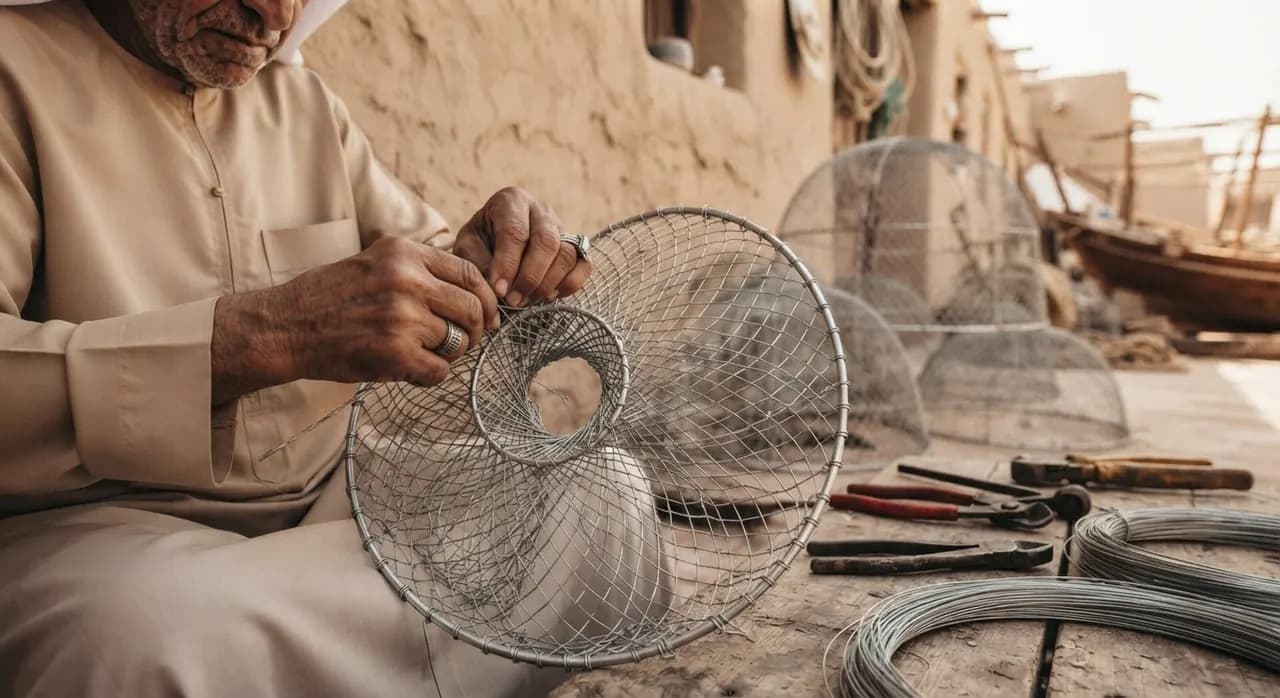
Born from the sea. Shaped by ingenuity.
Before modern fishing equipment, Gulf fishermen relied on what nature provided. Using palm fronds and later metal or galvanized wire—which lasts longer in saltwater—they crafted the gargoor, a rounded trap designed to catch fish underwater. Simple in appearance, its clever construction reflected generations of observation, resourcefulness, and knowledge of the sea.
Genius Wires, Engineered Trap!
What the animation shows
- Making it: shape the base ring, bend the ribs into a dome, weave the rings across, then narrow the funnel entrance.
- How it works: the bait calls the fish, the funnel guides them in, and the narrow exit leaves no easy way out.
- In the sea: it is lowered to rocky ground where fish gather, and a rope and buoy help find it and lift it again. Its entrance, body and bait are named.
The genius of the Gargoor lies in its entrance. Shaped like a funnel, the opening allows fish to swim inside towards the bait, while its narrowing design makes escaping difficult. Its rounded body provides space for the catch, while its structure allows seawater to flow through. Every curve and opening serves a purpose.

Reading the sea, knowing where to cast.
A successful catch depended on more than the trap itself. Fishermen understood the seabed, knew where fish gathered and chose their locations carefully. They placed bait inside, lowered the Gargoor into the water, and marked its position with a floating buoy. It was a practice built on patience, experience and an intimate understanding of the marine environment.
Same Gargoor, Different Shores
The Gargoor is part of a long maritime tradition shared by coastal communities across the Arabian Gulf. Although its exact origins are difficult to trace, fishing traps made from natural materials, such as palm fronds, have been used for generations. Over time, the practice spread across the region, becoming part of fishing heritage in the UAE, Oman, Qatar, Bahrain, Kuwait and Saudi Arabia. Far from being a relic of the past, the Gargoor is still used in parts of the Gulf today, particularly in small-scale fisheries, though its use varies according to local practices and fishing regulations.