
Dhow building
A legacy of craftsmanship, carried by the waves
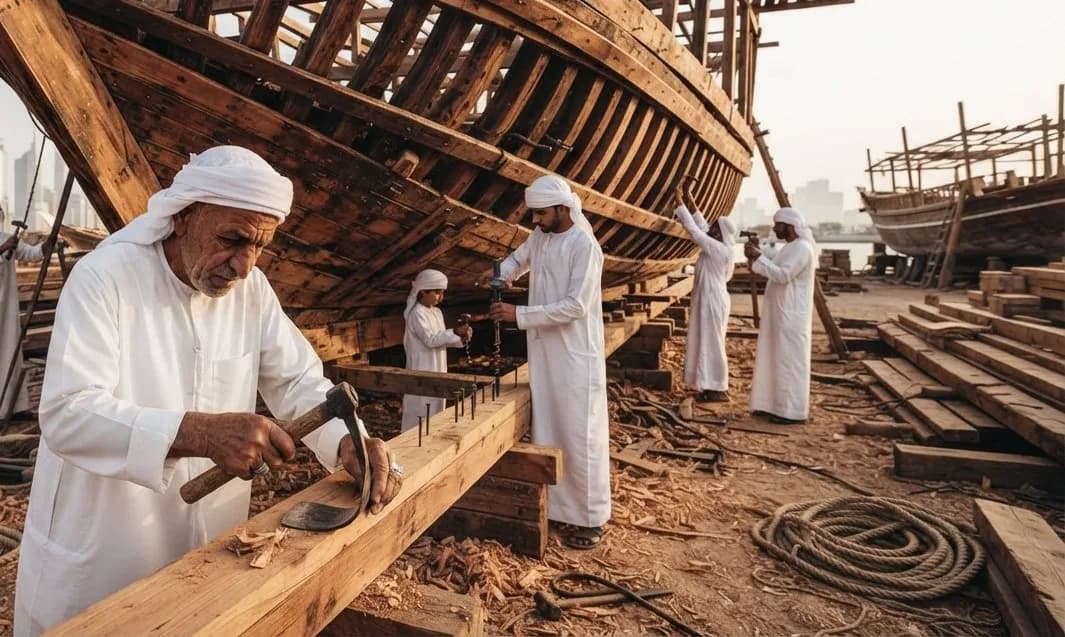
Born from the Sea
For generations, the sea shaped life along the Arabian Gulf, connecting coastal communities through fishing, pearling, trade and travel. Necessity gave rise to a rich maritime tradition, as people relied on traditional boats, known as dhows, to navigate their waters, reach distant shores and sustain their livelihoods. From Oman and the eastern Arabian Peninsula to Bahrain, Qatar and Kuwait, communities developed their own dhow-building traditions, crafting vessels suited to their surroundings and the demands of life at sea.
From Timber to Dhow
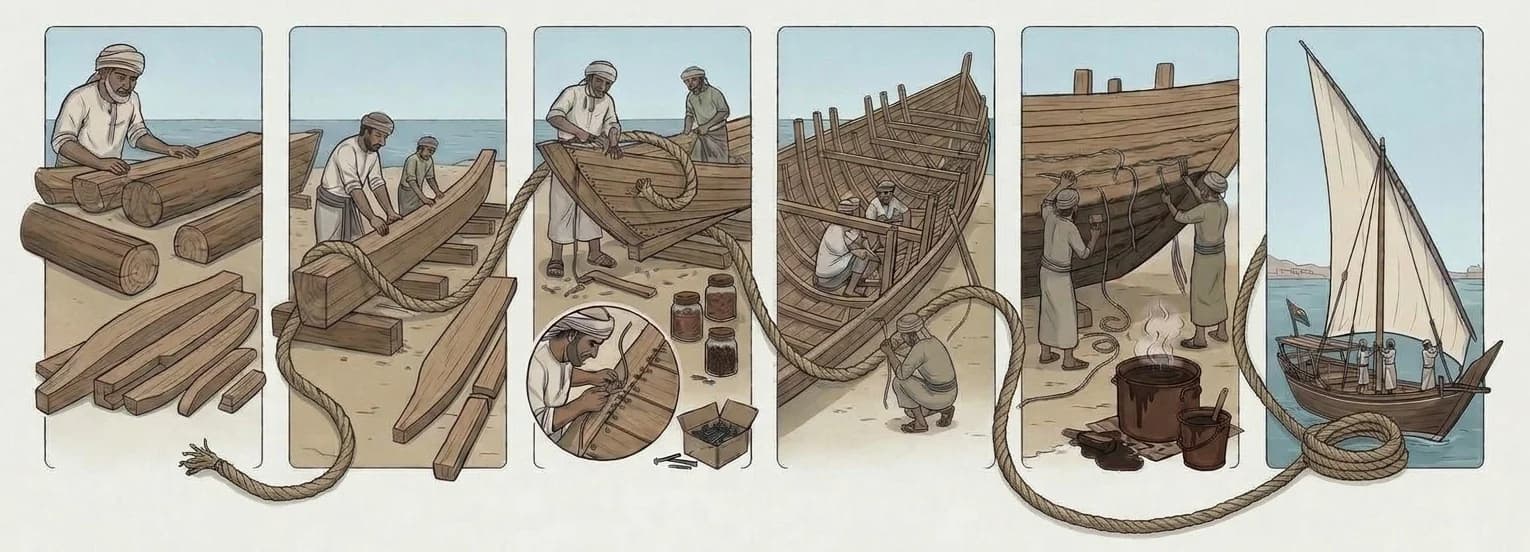
Traditional dhow-building methods varied across Gulf countries and coastal communities, but the process generally followed similar stages. It began with selecting and preparing the timber, followed by laying the keel, shaping and joining the wooden planks to form the hull, and adding supporting ribs for strength. The gaps were then sealed to keep water out before the mast, sails and final fittings were added, bringing the dhow to life.
A Craft Built on Knowledge
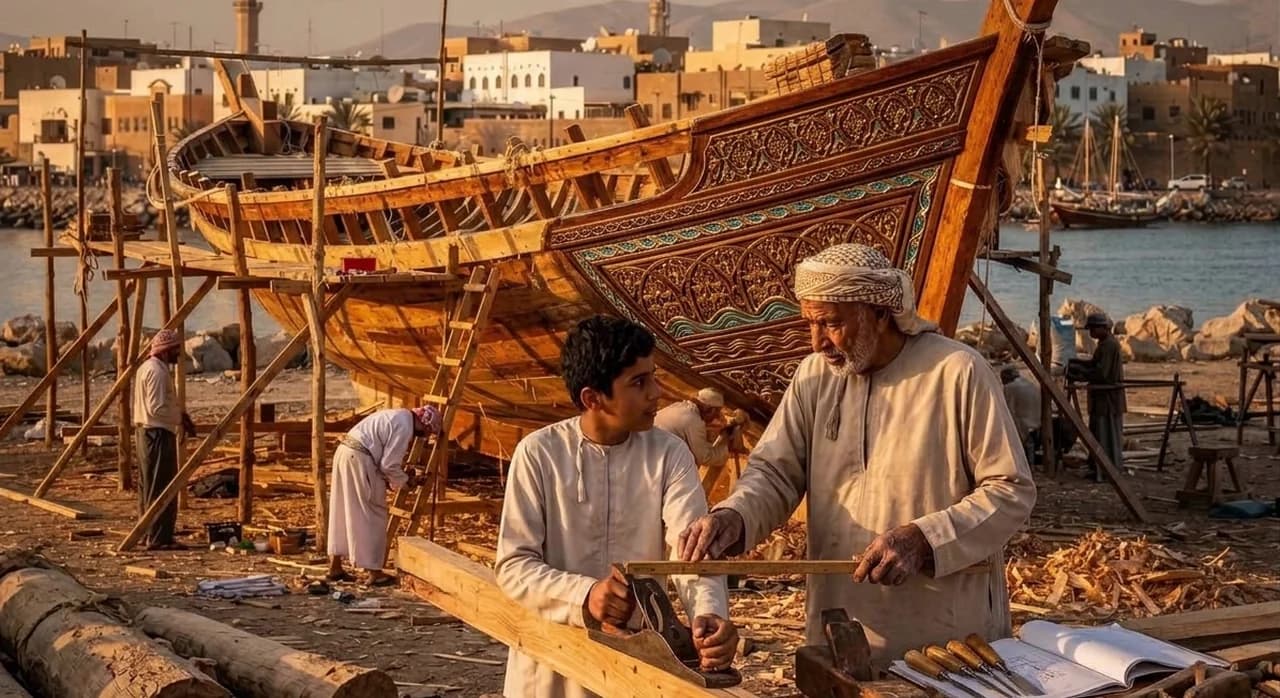
Building a traditional boat required more than woodworking; it called for a deep understanding of the sea, materials and how boats move through water. Skilled shipbuilders drew on generations of practical knowledge to select timber, measure proportions, shape wooden parts and bring each boat together. Working alongside apprentices and other craftsmen, they passed down their techniques through observation and hands-on practice, preserving a craft shaped by experience, precision and an intimate relationship with the sea.
Every Boat Has a Purpose
What the film shows
- Dhows sail into a harbour at sunset: “Every Boat Has a Purpose. Designed for journeys, shaped by livelihoods.”
- Fishing and coastal boats: small boats like the Hoori and Shu’ai worked shallow coastal waters, while larger ones carried crews and equipment farther offshore.
- Pearling boats: the Sambuk, prized for its speed, and the Jalboot, Batil and Baqqarah carried divers to the oyster beds, a working home at sea for weeks or months.
- Trading ships: large dhows like the Boom and Baghlah carried dates, textiles and timber across the Indian Ocean to India, East Africa and beyond.
- Builders at work in a boatyard: boats served fishing, pearling, passengers or trade, as each community that depended on the sea needed.
Across the Arabian Gulf, traditional boats came in many shapes and sizes, each designed around the needs of the people who built and sailed them. Some were small enough to navigate shallow coastal waters and support everyday fishing, while others were built to carry pearl divers to offshore oyster beds or transport merchants and goods across distant seas. Their designs reflected different journeys, from short trips between coastal settlements to long trading voyages connecting the Gulf with India and East Africa.
Over generations, several distinctive boat types became part of the region’s maritime heritage. Although their names and designs varied between communities, each carried a story of ingenuity, livelihood and life at sea.