
Al Sadu
A thread through time
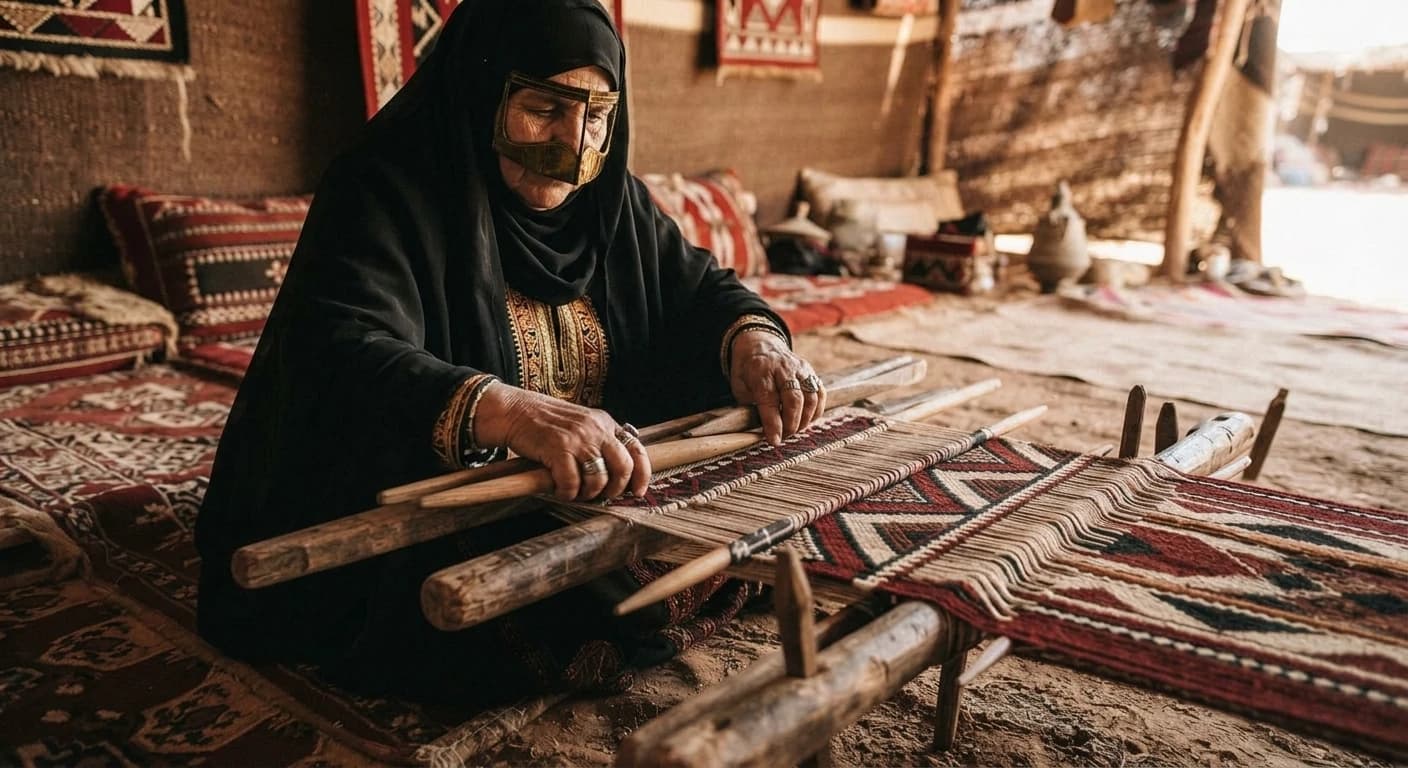
Born from necessity, shaped by creativity
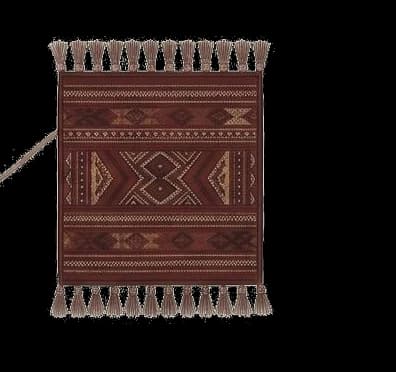
Al Sadu began with the needs of Bedouin life. Using wool from sheep and hair from goats and camels, people wove textiles for tents, furnishings, cushions and camel decorations. What began as a way to create shelter and comfort grew into an enduring expression of creativity, resourcefulness and heritage.
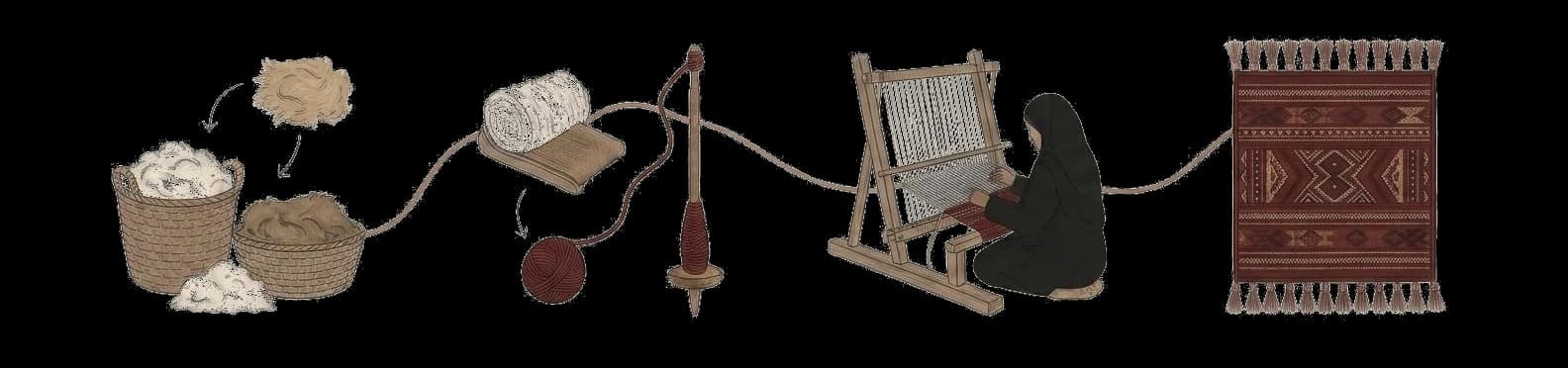
The journey of the thread
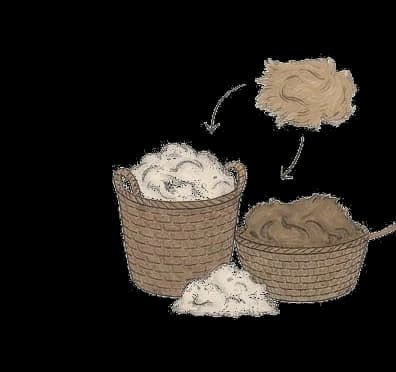
Gather
Collect wool from sheep and hair from goats and camels.
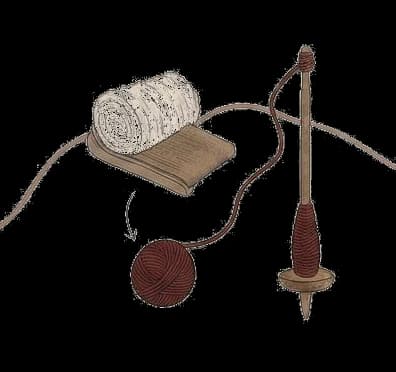
Prepare and spin
Clean and prepare the fibres, then spin them into yarn.
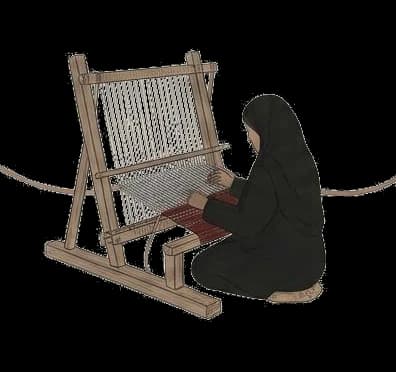
Weave
Interlace the threads on a simple loom, row by row.
Bring the pattern to life
Combine lines, shapes and colours to create a distinctive woven design.
A craft woven together
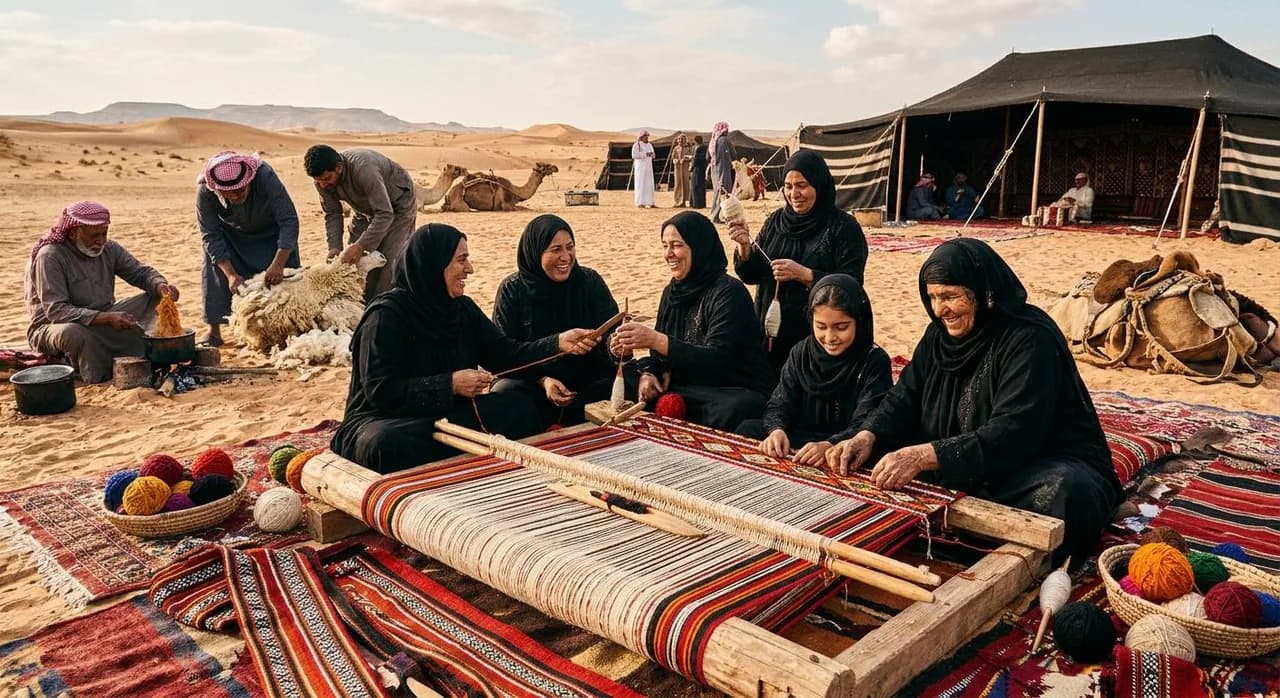
Al Sadu was never just about weaving; it was about weaving people together. Women gathered to spin, weave, exchange stories, sing and share knowledge, while men helped to prepare the fibres. Through these shared moments, skills and traditions passed from one generation to the next, strengthening the bonds of the community.
Geometry with a story to tell
Every line, shape and colour carries a thread of memory. Inspired by the rhythms of Bedouin life and the desert landscape, Al Sadu's geometric patterns reflect a rich visual heritage passed down through generations. Each weave connects the hands of today with the stories of those who came before.
Types of Sadu patterns
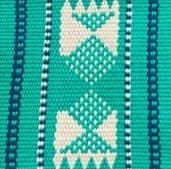
Al Sheera (the tree) 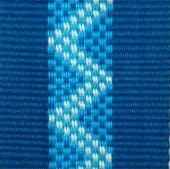
Darb al-hayya (the snake's trail) 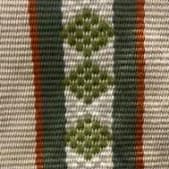
Al Muthakhar 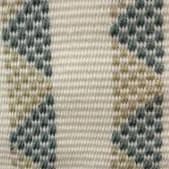
Al Owerjan 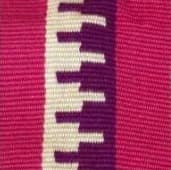
Durous al-khail (horses' teeth) 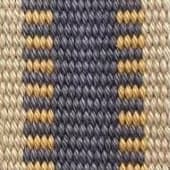
Al Madel'eya (the rib) 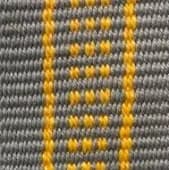
Ein Al Ghadeer 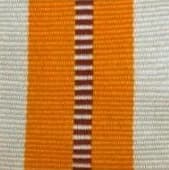
Al Silsila or Al Hoboob (the chain, or grains) 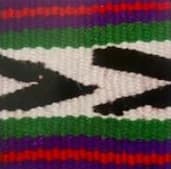
Al Migass (the scissors) 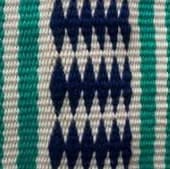
Al Mishit (the comb) 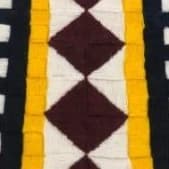
Al Hambaliya (Al Shnouf) 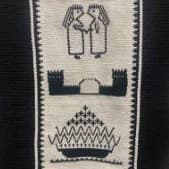
Al Rasm or Al Kitaba (drawing, or writing)
Al Sadu across the Arabian Peninsula
Sadu patterns and colours follow tribes and families more than national borders, and the same motifs appear across the Peninsula.
 UAE
Patterns Narrow bands, zigzags, diamonds and stripes; restrained, repeated geometric rows.
Used for Tent dividers, saddle bags, floor coverings, cushions.
 Kuwait
Patterns Bold bands and motifs tied to desert life; best documented (Sadu House).
Used for Tent walls, rugs, bags, camel decorations.
 Saudi Arabia
Patterns Diamonds, triangles and zigzags; varies by region (Najd, Hejaz, north, Asir) and tribe.
Used for Tents, rugs, camel trappings, bags.
 Qatar
Patterns Similar Bedouin geometry to its neighbours, in bands and stripes.
Used for Tent fabric, rugs, bags.
 Bahrain
Patterns Simpler banded patterns; a smaller, less documented tradition.
Used for Small weavings, heritage-centre pieces.
 Oman
Patterns Bedouin geometry with regional variation, for example the Wahiba Sands area.
Used for Rugs, saddle bags, camel gear.
Larger dots are main colours, smaller dots occasional accents; pattern bands are illustrative. Qatar, Bahrain and Oman are less documented.