
Dallah-making
Crafting the vessel of Arab hospitality and generosity
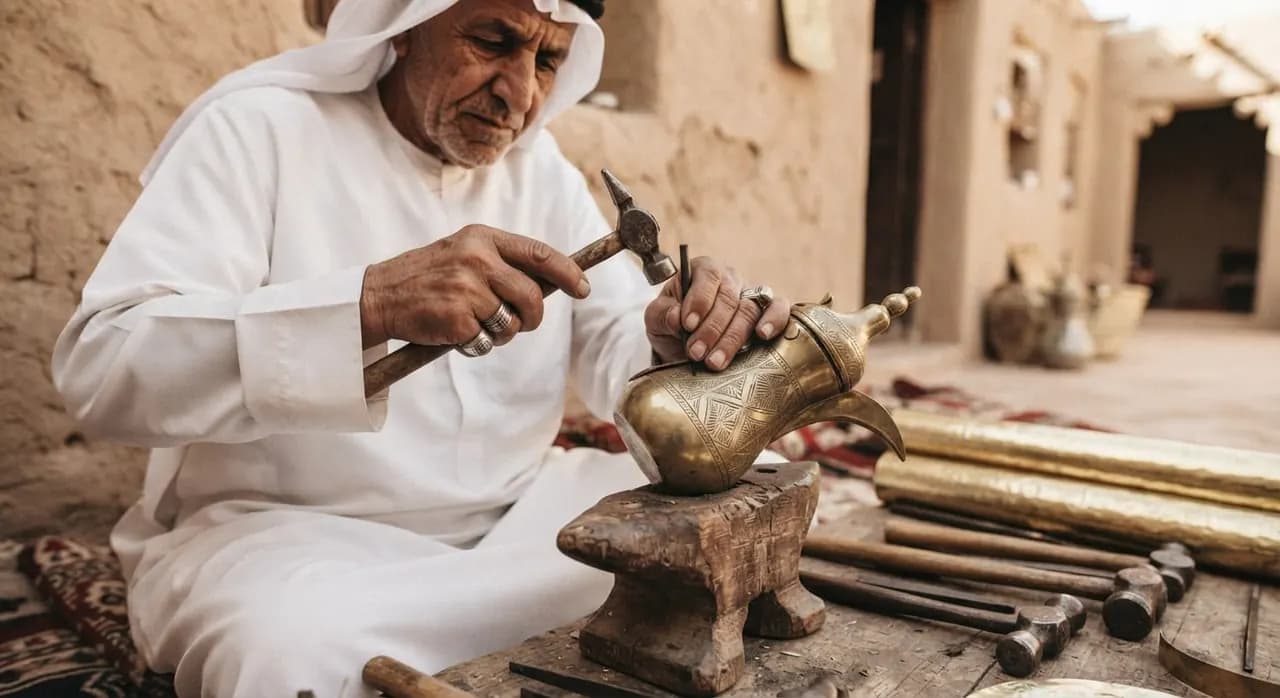
Crafting the vessel of Arab hospitality and generosity
The dallah is much more than a traditional coffee pot. For generations, it has been at the heart of Arab and Gulf hospitality, symbolising generosity, warmth and the art of welcoming guests. From family gatherings to formal occasions, serving Arabic coffee is a gesture of respect and connection. Behind its distinctive shape lies a craft passed down through generations, where skilled metalworkers transformed simple sheets of metal into an enduring symbol of cultural identity.
From Metal to Dallah
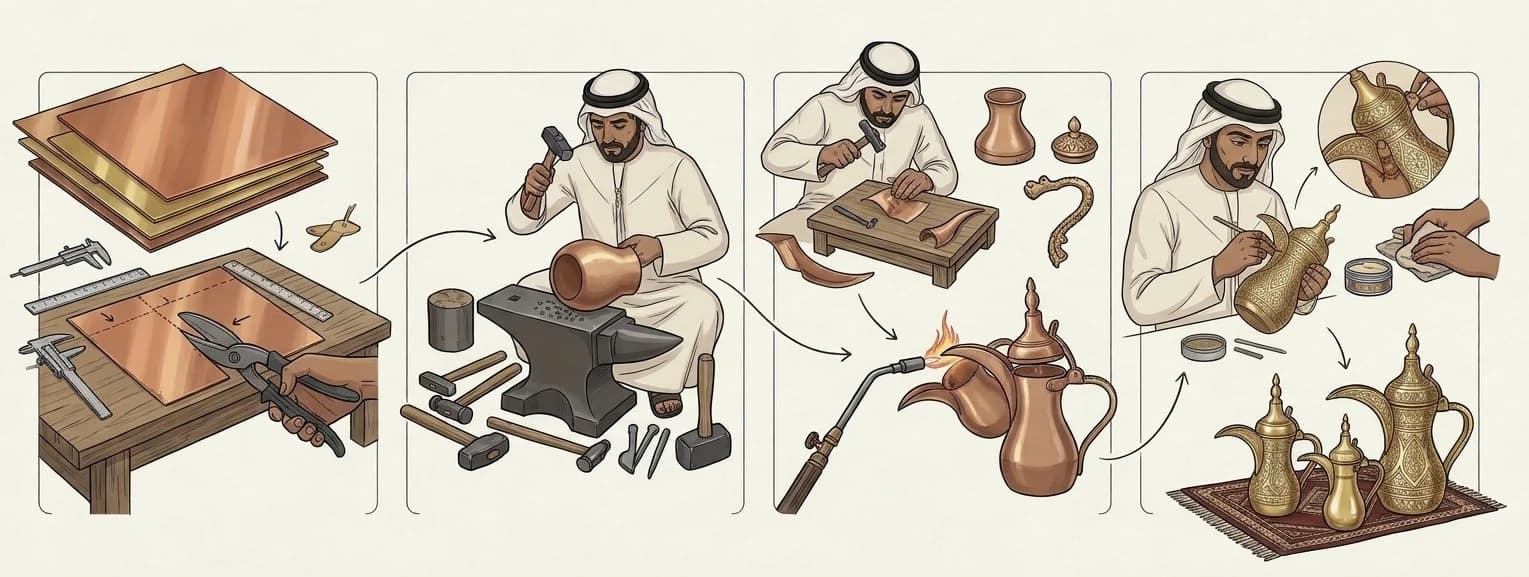
No two dallahs are exactly alike. Each craftsperson brings their own techniques and artistic touches to the process, yet the making follows a familiar journey. It begins with selecting and preparing sheets of copper or brass, which are carefully cut, hammered and shaped into the dallah’s rounded body. The neck, spout, lid and handle are then crafted separately and joined together to form the complete vessel. Finally, engraving, polishing and decorative details bring the dallah to life, giving each piece its own distinctive character.
The Craft Behind Every Curve
Recognised by its rounded body, narrow neck, curved spout, lid and long handle, the dallah brings together practical design and distinctive craftsmanship. Each feature serves a purpose, from holding and pouring coffee to preserving its warmth.
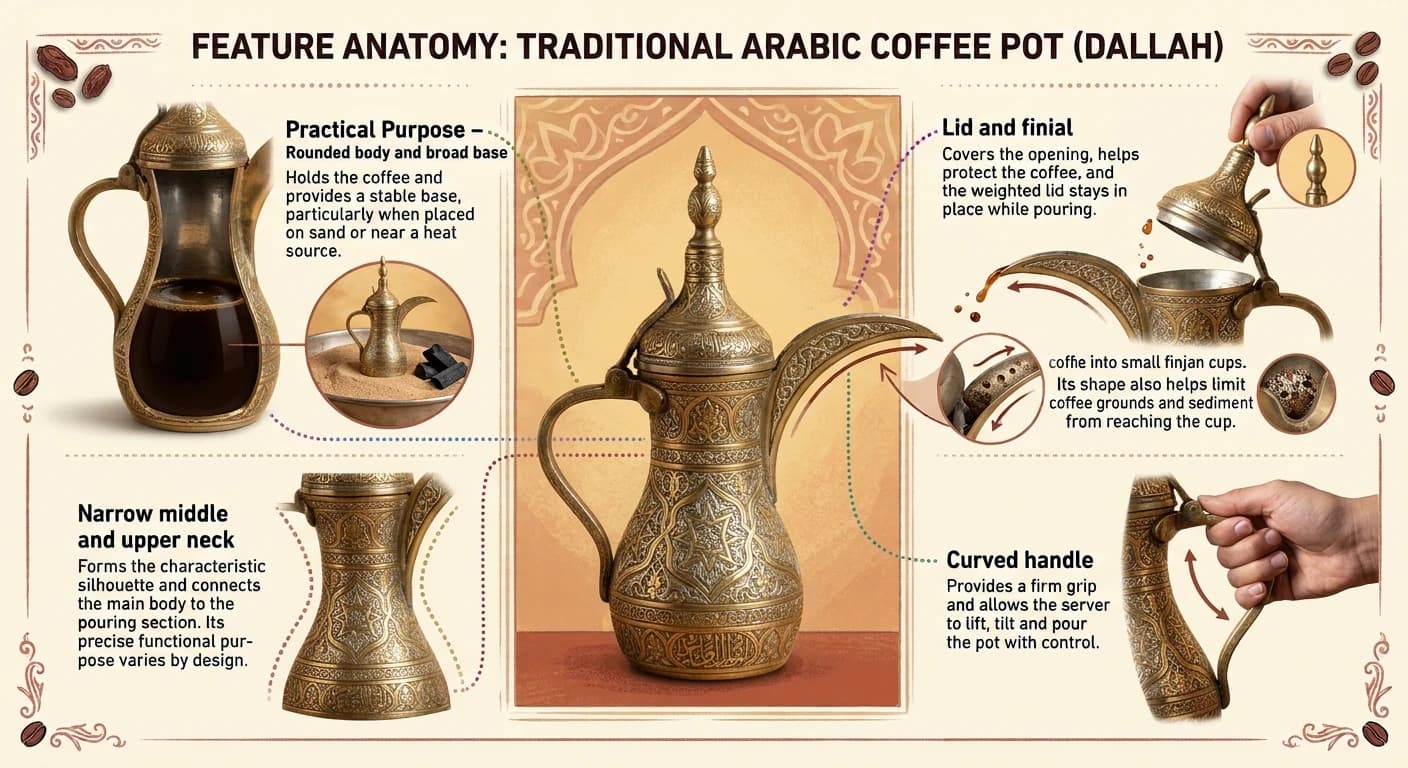
Across the Arabian Peninsula, metalworkers developed different shapes, finishes and decorative patterns, giving each dallah its own character while preserving its familiar form. Creating one required a trained eye, a steady hand and years of experience. Through hammering, shaping, joining and engraving, skilled artisans transformed sheets of copper or brass into functional coffee pots, passing their techniques and knowledge from one generation to the next.
A Legacy Served with Every Cup
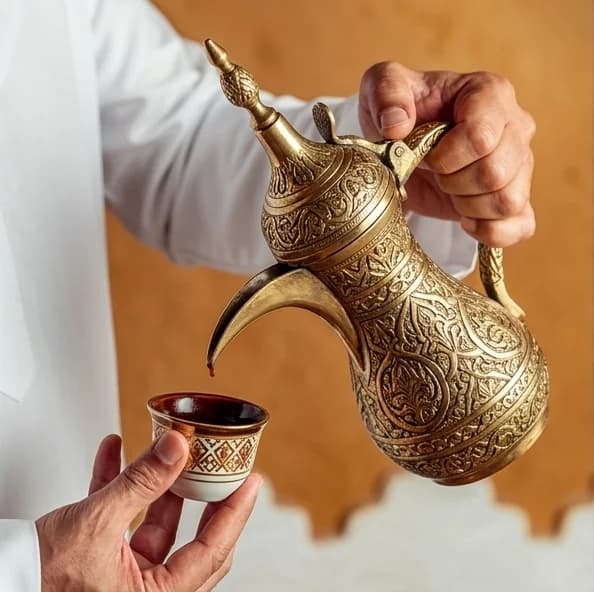
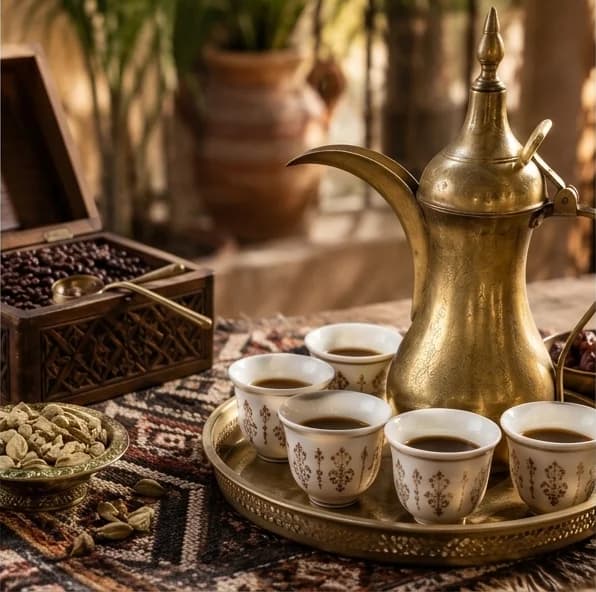
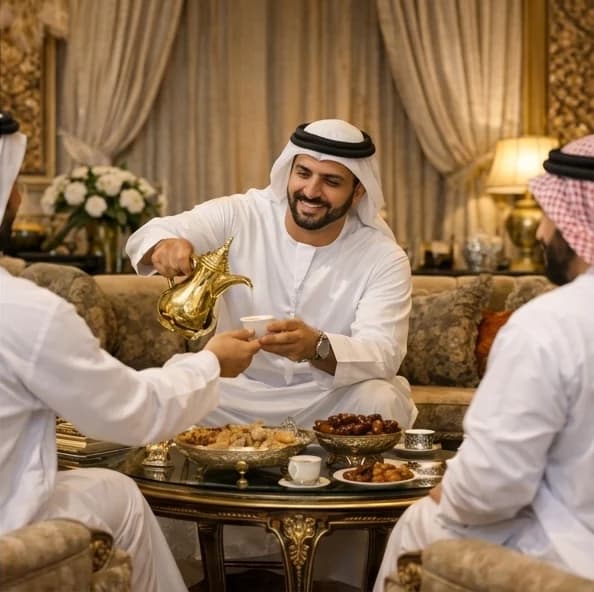
Today, the dallah remains an important part of Arab and Gulf hospitality, found in homes, majlis gatherings and cultural celebrations. While modern manufacturing has introduced new materials and production methods, handcrafted dallahs continue to be appreciated for their detailed workmanship and traditional character. More than an object of everyday use, each dallah carries a story of skilled hands, shared traditions and a culture of generosity that continues to be passed from one generation to the next.